
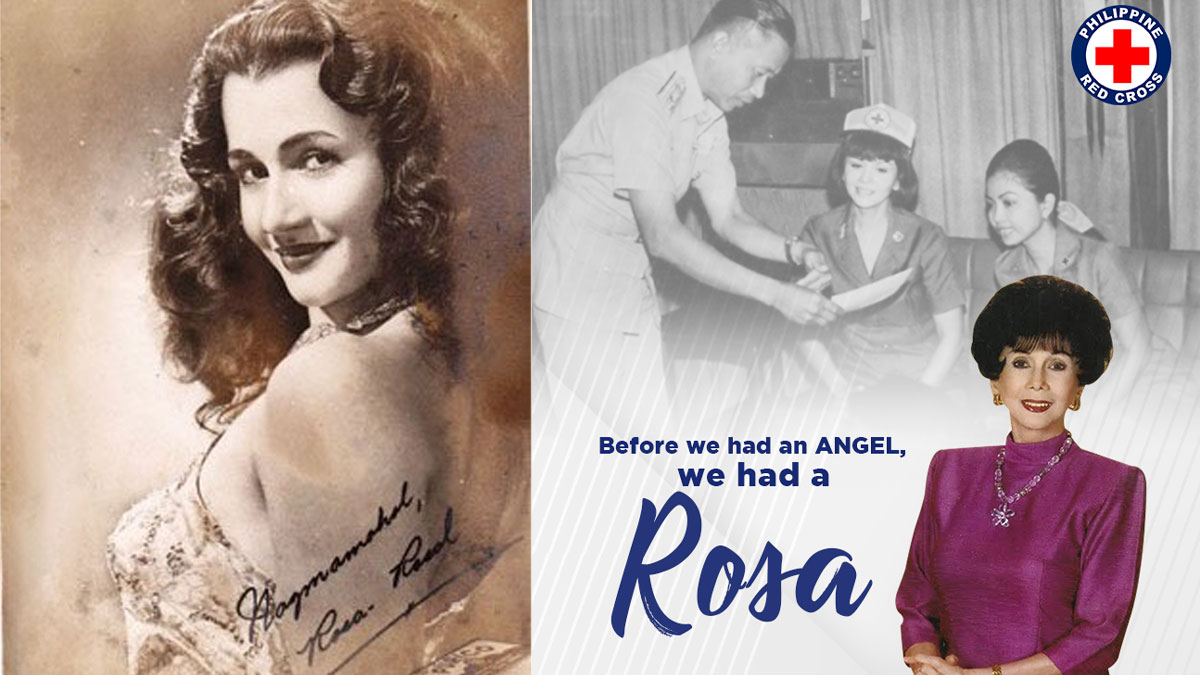

After being the victim of a death hoax last month, movie legend and Red Cross Philippines Governor Rosa Rosal has died at the age of 97.
On a Facebook post today, November 15, 2025, the Philippine Red Cross announced the veteran actress's passing.
READ: Rosa Rosal has passed away at the age of 97
"For over 7 decades, Gov. Rosal devoted her life to the service of the Red Cross," the organization said in its statement published on Facebook.
"She championed voluntary blood donation across the country, strengthened PRC’s welfare services, and used every platform she had to promote compassion, volunteerism, and the protection of the most vulnerable."
READ: FAMAS issues apology over false announcement of Rosa Rosal's death
The veteran actress is best recognized for her decades-long commitment to the Philippine Red Cross, where she helped drive its mission and advocacy dating back to its formative years in the country.
PEP.ph (Philippine Entertainment Portal) revisits the life and storied career of Rosa Rosal — one of the last living icons of Philippine cinema’s Golden Age, and the woman after whom the Filipino Academy of Movie Arts and Sciences (FAMAS) modeled its iconic trophy — whose legacy extends far beyond the silver screen.
NOT AFRAID OF HARD WORK
Born on October 16, 1928, Florence Lansang Danon grew up in Manila.
She has roots in Pampanga, the hometown of her mother, Gloria Lansang.
Meanwhile, her father, Julio Danon, was of French and Egyptian descent.
Her mother and father’s romance was a May-December affair: Julio was already in his 50s, while Gloria was only 18 when they tied the knot.
Sadly, Julio passed away when Florence was still very young, leaving her with no memory of the moments they shared.
“I was very young when he died. I had a very nice stepfather, Roberto del Barrio. He treated me like I was his own daughter,” she would later recall.
She described him as “very quiet,” “soft-spoken,” and “a wonderful man who loved my mother very much.”
Roberto was involved in the buy-and-sell trade, while Gloria – a skilled cook, as many Pampangueños are – helped support the household through her catering business.
Florence began her studies at Antonio Regidor Elementary School and later attended Arellano High School for her secondary education.
Before entering show business, the young Florence put her typing skills, honed since she learned to use a typewriter at age 12, to practical use.
She first worked as a clerk and later became a newsreader for a Japanese-run radio station in Escolta, Manila, during the Japanese occupation.
She credited her childhood habit of reading English newspapers for sharpening her command of the language, a skill that gave her an advantage and helped her secure work at an early age.
After World War II, Florence worked as a doctor’s secretary at the National Chest Center in San Lazaro Hospital in Manila.
"My boss was Dr. Sixto Francisco, a very nice man. I took dictation, did his letters, and I became his private secretary," the veteran actress reminisced.
She admitted that during her job interview, she lied about her age, claiming to be 18 to increase her chances of getting the job.
Ever curious, Florence learned how to operate the X-ray machine during her downtime at work and would even assist patients who needed the procedure.
“I saw a lot of sick and needy people,” she vividly remembered.
Looking back, Florence’s hospital work hinted at her future in healthcare, though she didn’t realize it then.
SHOWBIZ CAME KNOCKING
Like many actors of her generation, Florence never sought the limelight but was discovered by chance in the middle of her daily routine.
Balancing school and a secretarial job, she once passed by the filming of Fort Santiago on her way home from work.
As fate would have it, film producer Luis Nolasco caught sight of the young hospital worker and instantly recognized her potential to be a film star.
He approached Florence and asked her on the spot to join the movie as an extra.
That was followed by another invitation from Luis for Florence to appear in another movie that his film company, Nolasco Brothers Studio, was doing.
But if Luis thought his charming discovery would easily accept the offer, he was mistaken.
He and his team quickly learned that Florence was feisty and outspoken.
As a student, Florence had already built a reputation for assertiveness, often taking on leadership roles in class and on campus, which occasionally led to clashes with peers and even confrontations with bullies.
"I told Mr. Nolasco, ‘Look, I’m a busy person. If you want me to be an actress, give me a screen test,” Florence flatly told a surprised producer.
“If you want me, good! But I will not come back and forth for this. As soon as I turned around, sabi nila, ‘Di pa nga nag-uumpisa, suplada na.’ That’s how my movie career started!"
Florence eventually signed a contract to join Nolasco Brothers Studio as its talent.
What’s with the screen name?
But before anything else, the young actress needed a screen name that would leave a mark with audiences.
The Nolasco Brothers Studio searched for the right fit, even holding a public contest to solicit suggestions, but none impressed the executives.
The breakthrough came unexpectedly when Florence herself stumbled upon the name during a party hosted by Luis for American director Sidney Salkow.
Sidney was the director of the 1948 adventure film Sword of the Avenger, which was set in the year 1827.
According to the story, Florence was captivated by a floral arrangement of white gardenias and red roses on the buffet table.
Gardenias are commonly known in the Philippines as rosal. As she admired the bouquet, she remarked to herself, “How nice, a rose and a rosal.”
Luis overheard her comment and was struck by how pleasing the words sounded together.
On the spot, he decided to give his young discovery the screen name “Rosa Rosal,” combining the English word “rose” and the local term for gardenia.
RISE TO FAME
Rosa eventually moved to the more established LVN Pictures, a move that underscored how her talent was gaining recognition beyond her home studio.
Moving to LVN under the watch of its co-founder, Doña Sisang de Leon, opened new doors for Rosa, and more projects came her way, including Kamagong, Himala ng Birhen (sa Antipolo), Sarung Banggi, Huling Dalangin, and Sumpaan.
In 1949, the 21-year-old Rosa was entrusted with her first starring role in Biglang Yaman – a satirical film about people whose fortunes changed after suddenly getting wealthy.
The film, which also stars Jaime de la Rosa and comedians Pugo and Togo, was a big hit when it came out in cinemas.
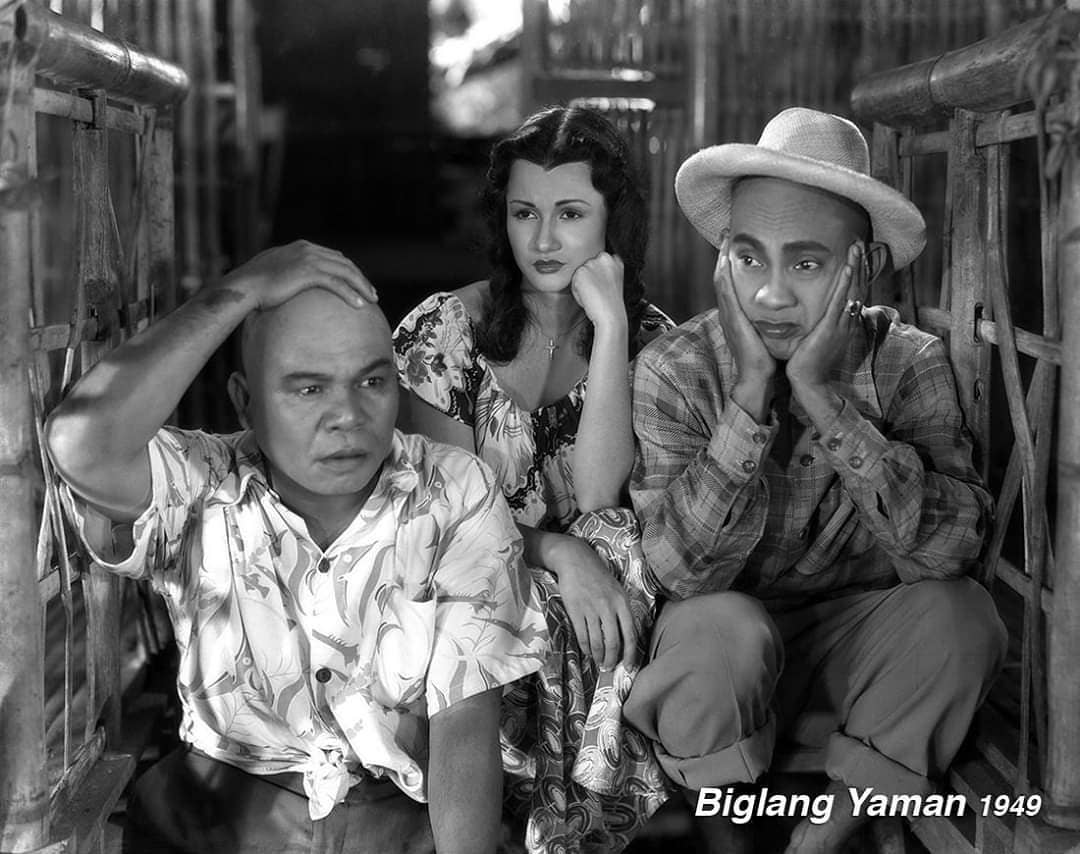
The success of Biglang Yaman encouraged LVN to cast Rosa in several more films to make the most of her rising fame and bankability.
Rosa found her niche in period and costume drama films like Prinsipe Amante sa Rubitanya, and movies with social-economic themes like Anak Dalita, where she portrayed a prostitute who falls in love with a Korean war soldier, and Badjao: The Sea Gypsies, which tells the love story of a Badjao man and a woman from Tausug.
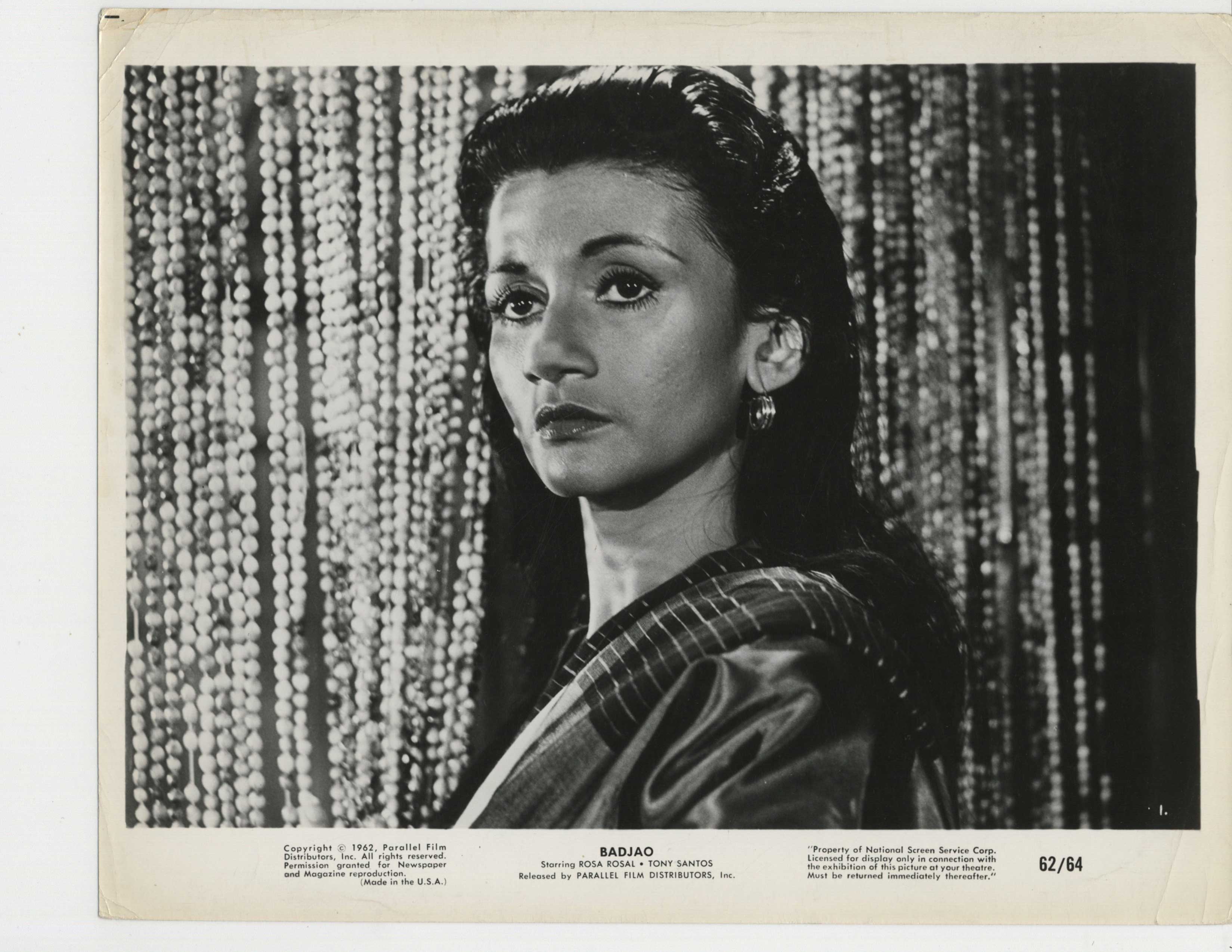
Typical of Rosa, she was always up for new challenges and thrived in portraying characters that veered away from the protagonist’s type.
Rosa once quipped about villain roles: "I liked it because the sweet roles were not challenging. In my time, if you were a kontrabida, there was repentance or retribution in the end.”
Thanks to her 22-inch waist and seductive looks, Rosa flourished, assuming the so-called femme fatale roles, or woman characters who use their seductive charms to manipulate men.
View this post on Instagram
Rosa had no qualms about wearing swimsuits, skimpy outfits, or doing kissing scenes on camera to bring her roles to life.
And she did all these during the 1950s, a time when audiences were generally conservative, and simply appearing in a swimsuit on screen was far from typical.
Rosa relished the opportunity to take on a variety of roles, having proven her ability to portray both heroines and villains, and she had no problem playing supporting characters either.
She won FAMAS Best Actress in 1955 for the movie Sonny Boy, along with several nominations and a citation from Philippine President Ramon Magsaysay after Anak Dalita won Best Picture at the Asian Film Festival in Hong Kong.
Her bankability as an actress and the box-office success of her films earned her the moniker “Queen of Philippine Movies” during this time.
And then there was Rosa’s love for publicity stunts, an instinct that often drew her into the center of controversy.
One story tells of Rosa walking her dog along Roxas Boulevard — then known as Dewey Boulevard — wearing short shorts and a tight sweater, reportedly distracting motorists so much that it caused car accidents.
When Filipino soldiers were deployed to Korea, Rosa became their beloved pin-up girl, writing them letters, sending care packages, and even performing for them as a guest celebrity.
Unsurprisingly, it ruffled feathers among some military wives, who felt uneasy about sharing their husbands’ attention with a famous movie star.
A LIFE FAR FROM HER SHOWBIZ PERSONA
Rosa’s life on and off camera was full of contrasts.
While she embodied the glitz and glamour of showbiz, she remained a private individual, avoiding the celebrity lifestyle embraced by many of her peers.
She shunned parties, didn’t smoke or drink, and often felt uneasy at industry social events.
Early on, Rosa realized that life offered more than fame, prompting her to pursue interests outside show business to stay grounded.
She completed her Business Administration course at the now-defunct Cosmopolitan College in 1954, balancing in-person classes with a demanding film schedule.
When she first entered showbiz, Rosa continued working as a doctor’s secretary, carefully arranging her schedule to attend film shoots without leaving her job.
Her time at the hospital only ended when she formally signed a talent contract with the Nolasco Brothers Studio.
ROSA ROSAL: THE FACE OF RED CROSS PHILIPPINES
In 1948, Rosa visited a blood donation drive by the Philippine Red Cross upon the invitation of an American friend named Ray Higgins.
Established in 1947, the Philippine Red Cross (PRC) is the local arm of the International Red Cross and Red Crescent Movement — a non-profit organization best known for its humanitarian work, particularly in providing blood supply to hospitals and medical facilities.
The sight of people willingly contributing blood to help those in need of transfusion touched and impressed Rosa.
Rosa remembered first seeing blood plasma — the liquid component of blood containing important proteins that the body needs — as a young girl when she accompanied her stepfather, who was wounded by shrapnel, to a makeshift treatment facility during World War II.
Rosa’s interest in the PRC advocacy led her to visit hospitals across the city to better understand how the organization saves lives.
During a visit to the Philippine General Hospital, she encountered a young patient in a coma after a fall from a building.
With the help of her neurosurgeon friend, Dr. Victor Reyes, Rosa learned the girl needed a blood transfusion due to internal bleeding.
She stayed by the patient’s side, holding her hand as hospital staff administered the transfusion. To her amazement, the girl regained consciousness before her eyes.
The experience left a profound impact on Rosa, revealing how blood donation and the transfusions that follow can mean the difference between life and death.
She recognized that the PRC urgently needed support, from volunteers and personnel to reliable infrastructure and data, to sustain its operations.
Seeing how she could leverage her celebrity status, Rosa began organizing blood donation campaigns, encouraging the public and fellow celebrities to participate.
She also advocated for regional blood centers and laboratories where anyone, regardless of means, could have their blood tested.
Under her leadership, the Philippines procured its first refrigerated centrifuge and the equipment needed to screen blood for the AIDS virus.
Rosa also hosted public-service television shows, Damayan and Kapwa Ko, Mahal Ko, to help the less fortunate gain access to medical services and financial aid.
Her humanitarian efforts earned Rosa several citations, including the prestigious Ramon Magsaysay Award in 1999 for her public service efforts.
WHIRLWIND, SHORT-LIVED ROMANCE
Rosa married American-Polish pilot Walter Gayda in 1957 at the Our Lady of Sorrows Church in Pasay City.
The two met in Hong Kong and got engaged just three months after meeting.
Walter, according to Rosa, resembled Hollywood actor Clark Gable of Gone with the Wind fame.
At the time of their wedding, Rosa was 28 and at the peak of her stardom, while Walter was 43.
Though he knew she was a public figure, Walter hadn’t grasped the extent of her fame until their wedding day, when he was left stunned by the massive crowd gathered outside the church, all eager to catch a glimpse of his superstar bride.
The overwhelming crowd inside and outside the church created such chaos that a statue toppled over, an incident Rosa would later recall with unease, describing it as a “bad omen.”
The newlyweds immediately flew to Hawaii for their honeymoon.
For Walter, it was also an escape from public attention, which he found unsettling and intrusive.
But whatever hopes Walter had for privacy in a foreign country were immediately dashed the moment their plane landed in Hawaii.
Reporters and photographers were already waiting at the airport, eager to speak with the couple and snap photos, especially of Rosa.
Rosa’s fame proved too much for Walter, turning what should have been a quiet honeymoon into a stressful ordeal, at least from the groom’s perspective.
“I was on the front page of all the papers. Then [Filipino boxer] Flash Elorde fought in Hawaii, and he gave me his gloves – front-page news again! That kind of thing went on for a while.
"On the fifth day of our honeymoon, I woke up and he was gone. No note. His friend told me, ‘Rosa, pack your bags and go home,’” Rosa vividly recalled in an interview.
She said further: "I guess he was an egoist, and he couldn’t take being Rosa Rosal’s husband.
"It was devastating. I never even had a boyfriend before that.
“I went home to the Philippines, and my mother asked me, ‘Asan asawa mo?’ ‘Ewan ko.’ ‘Paanong ewan mo?’ 'Basta ewan ko, nawala na lang siya,'" she told Lucy Torres-Gomez in an interview for The Philippine Star published on July 28, 2010.
"It was tough, but I had a very wonderful mother, and she was my pillar. Whatever I am today, I owe it to her."
Rosa's short-lived marriage, though, produced a daughter in Toni Rose Gayda.

“When she was little, she never asked, so I never told her anything," Rosa said about Toni's early years without a father.
"But she was growing up fast, so I reached a point when I had to figure out how to break the news to her.
"Every playtime, every bonding time we had, I would tell her a story about a little girl whose father left her.
"Toni Rose would ask, ‘How is that mommy now?’ or ‘How is that little girl?’ They are both okay, I would answer. This went on for some time.
"When she was seven years old, I told her, ‘Toni, remember that little girl in the story I always tell? That little girl is you. And that mommy is me.’ She just hugged me. And that was it. Life went on.”
When asked if she knows where her ex-husband is and how he is doing, she replied with a tinge of humor: “Ay, patay na, thank God."
STILL GLOWING IN OLD AGE
Although Rosa focused much of her energy on humanitarian work rather than showbiz, she remained mindful of her health and appearance.
In an October 2005 interview with The Philippine Star, Rosa revealed that she has been conscious of her diet since her 20s, often avoiding food in the evenings, which explains her iconic 22-inch waistline in her heyday.
She also maintains a strict wellness routine, exercising regularly, abstaining from alcohol and smoking, and investing in skincare products — a habit she maintained from her youth into her later years.
Undoubtedly, her tireless work with the Red Cross, reflecting her genuine dedication to helping those in need, rejuvenates her and contributes to her sense of purpose.
For Rosa, the Red Cross has always been a refuge and a reminder to persevere when life feels overwhelming.
“I moved on with my life. And then the Red Cross came. I got so involved in the cause I did not have time to feel bad about my life anymore," she said, referring to the time when her marriage broke down.
Then there's the agony of losing her grandson Edward James in 2010 after accidentally falling from a condominium building in Mandaluyong.
“When my grandson James died March 19 of this year, my heart broke into a million pieces," she mused.
"Up to now, I have not recovered. That is why I go to the Red Cross every day, I need to be busy to get my mind off it.”
She added, “But I’ve always had this attitude of great surrender. I may look strong, but deep inside, I am always crying.
"But I never question Him. I have a very personal relationship with God. I talk to Him out loud. When I wake up, I commit my day to Him. At night, I have a one-on-one with Him. My faith is very important to me."