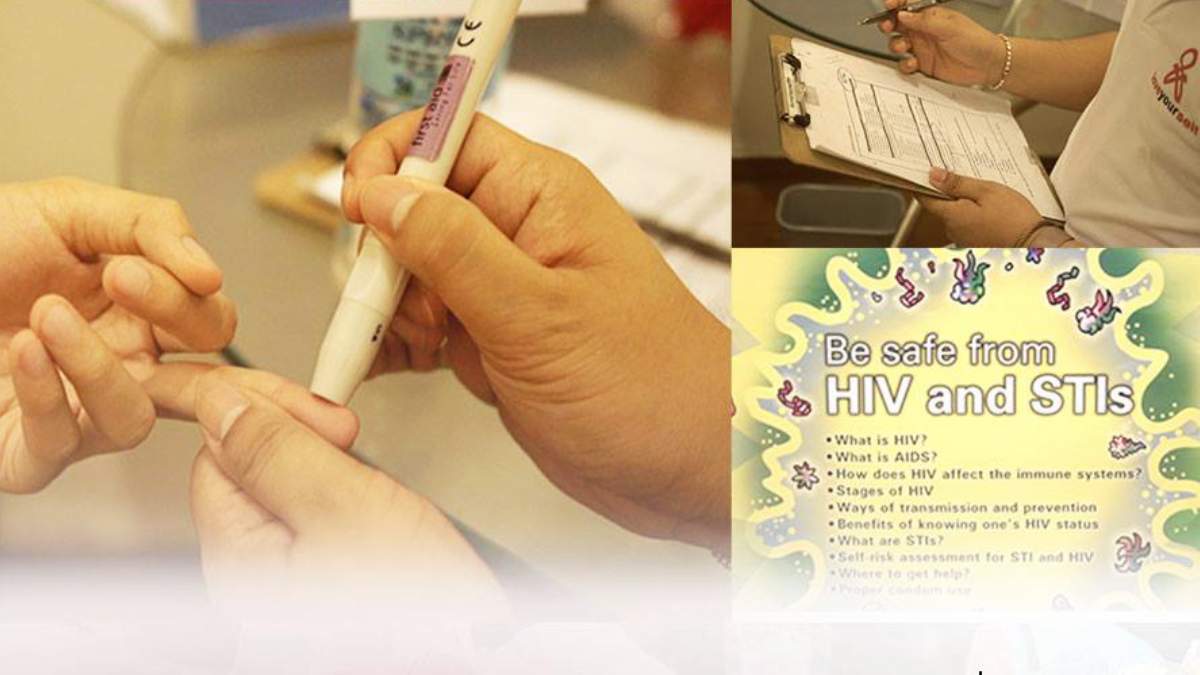

In observance of World Aids Day, earmarked every December 1st of the year to raise awareness about HIV/AIDS, the Department of Health (DOH) has announced that the public can get tested for free.
The agency has recorded 26,700 new HIV infections in 2023, with half of the new infections coming from the youths aged 15 to 24 years old.
Failure to act now will raise this figure up to 400,000 by 2050,
If that's not alarming enough, United Nations Programme on HIV and AIDS (UNAIDS) Country Director Dr. Louie Ocampo said the Philippines will need PHP45 billion to finance HIV prevention and treatment in the next three years, but the country can only cover PHP22 billion—less than half of what is required to carry out this initiative.
Apart from logistics, awareness also remains a challenge.
Ocampo said only 30% of the gay and trans community are aware that HIV is transmitted through semen, vaginal secretion, breastmilk, and blood.
And fewer people know that even those who haven't had sex can carry the virus without knowing it as it can be passed from mother to child during pregnancy and through blood injections.
Also read: HIV Self-Testing Kits Are Free in QC, Here's How to Get One
What to expect in a free HIV testing session?
Something to note: most HIV-related services should be free in public health facilities across the country, according to the DOH.
Some local government units in Quezon City also provide HIV self-testing kits for free.
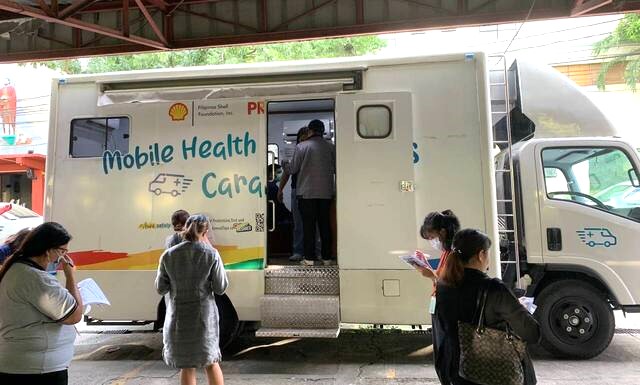
In my case, I was tested at a mobile health caravan stationed at the DOH Center for the World Aids Day event.
Do note that there is a window period for HIV. It can take up to three months after infection before a test can detect HIV. That said, it's best to wait for a few weeks or months before taking a test.
First things first.
I had to fill out a health form before taking the test. It asked for the usual personal information like full name, contact number, and home address.
Those with PhilHealth will also be asked to write the identification number on the form. At the back is where the more sensitive questions are.
It asked when my most recent oral/vaginal/anal sexual experience was and if it was with or without a condom.
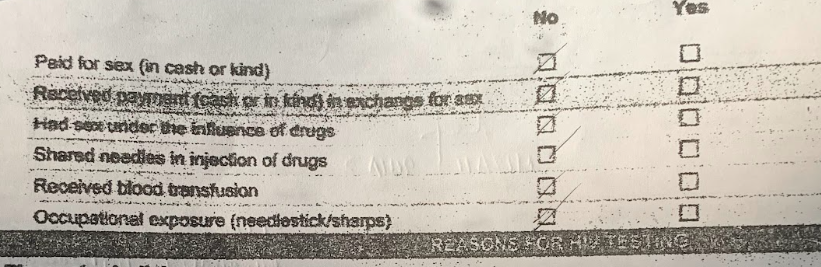
Other sensitive questions include: Have you ever a) paid for sex? B) received payment in exchange for sex? C) Had sex under the influence of drugs? D) shared needles in injection of drugs? E) Received blood transfusion? And F) had occupational exposure to needles?
Make sure to answer the questionnaire honestly. Confidentiality is strictly maintained in this process. Don't be shy in answering—the healthcare professional will likely not ask about your responses unless your result comes out positive.
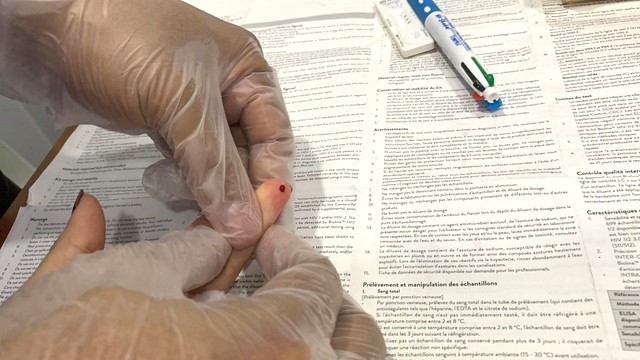
The fun for me began after I filled out the form. Before I even knew it, the healthcare professional wiped my middle finger with alcohol and pricked it with a pin.
It wasn't just one dot of blood that was squeezed out from my finger. but a whole lot to make sure there was enough on the testing kit.
The pain was like an ant bite or a small pinch—I felt it for only a brief second.
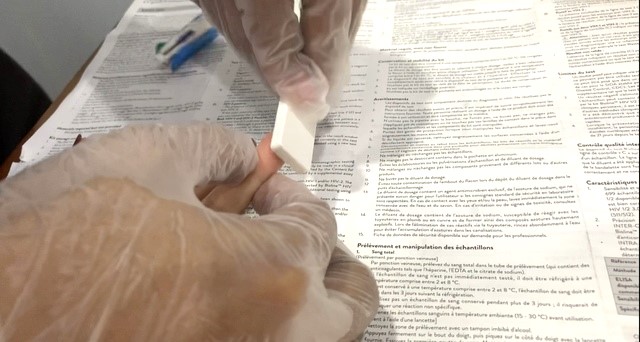
The healthcare professional proceeded to drop liquid onto the test. The whole experience was like taking a COVID-19 antigen test using blood. It was fast, straightforward, and reliable (it should be, as long as the window period is out of the way).
At no point did I feel conscious or awkward about the process.
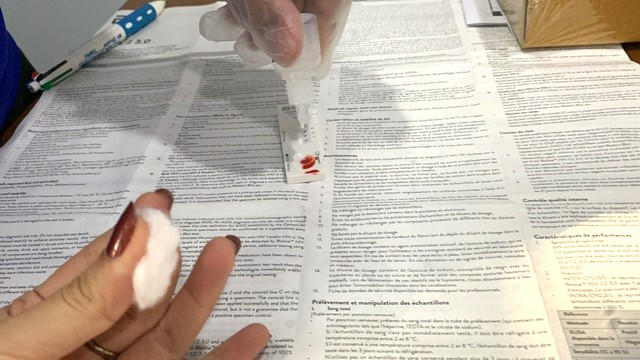
I was asked to wait for 20 minutes for the results.
Afterwards, I was called in the caravan to discuss my result in private. Another healthcare professional explained to me how the test worked.
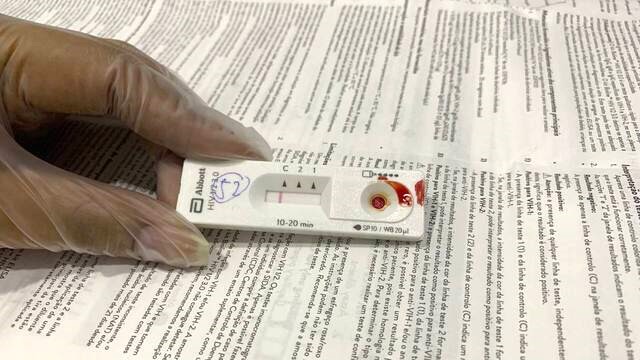
Essentially, HIV tests look for antibodies produced by the body in response to the virus—if existing.
One line means the test is negative (no HIV antibodies); two lines, it's positive (HIV antibodies are present).
A positive result will be confirmed with further testing for a more accurate result.
Thankfully, no HIV for me.
Also read: How Did the Pandemic Make Life Harder for People with HIV?
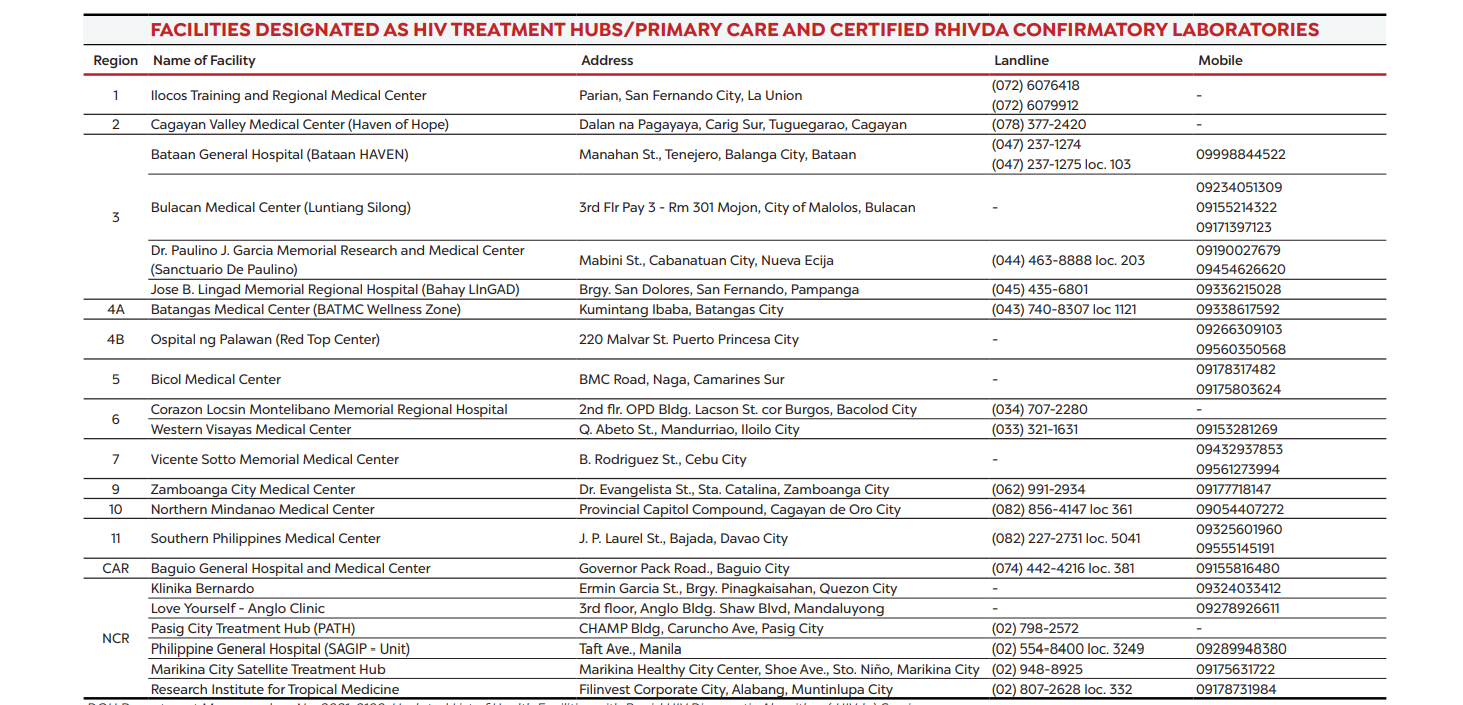
Where to get HIV testing for free in the Philippines
Here's where you can get tested and treated for free based on the HIV/AIDS & Art Registry of the Philippines of 2021.