“Ako'y tahimik lang sa umpisa.”
Toni Fowler's opening salvo to a series of explicit lyrics rather unexpectedly mirrors my own behavior just before I immerse myself in the spectacle of her music videos.
I am quiet at first. But once I take the plunge, floodgates burst wide open.
Here is my take on Toni's HITS & MISSES.
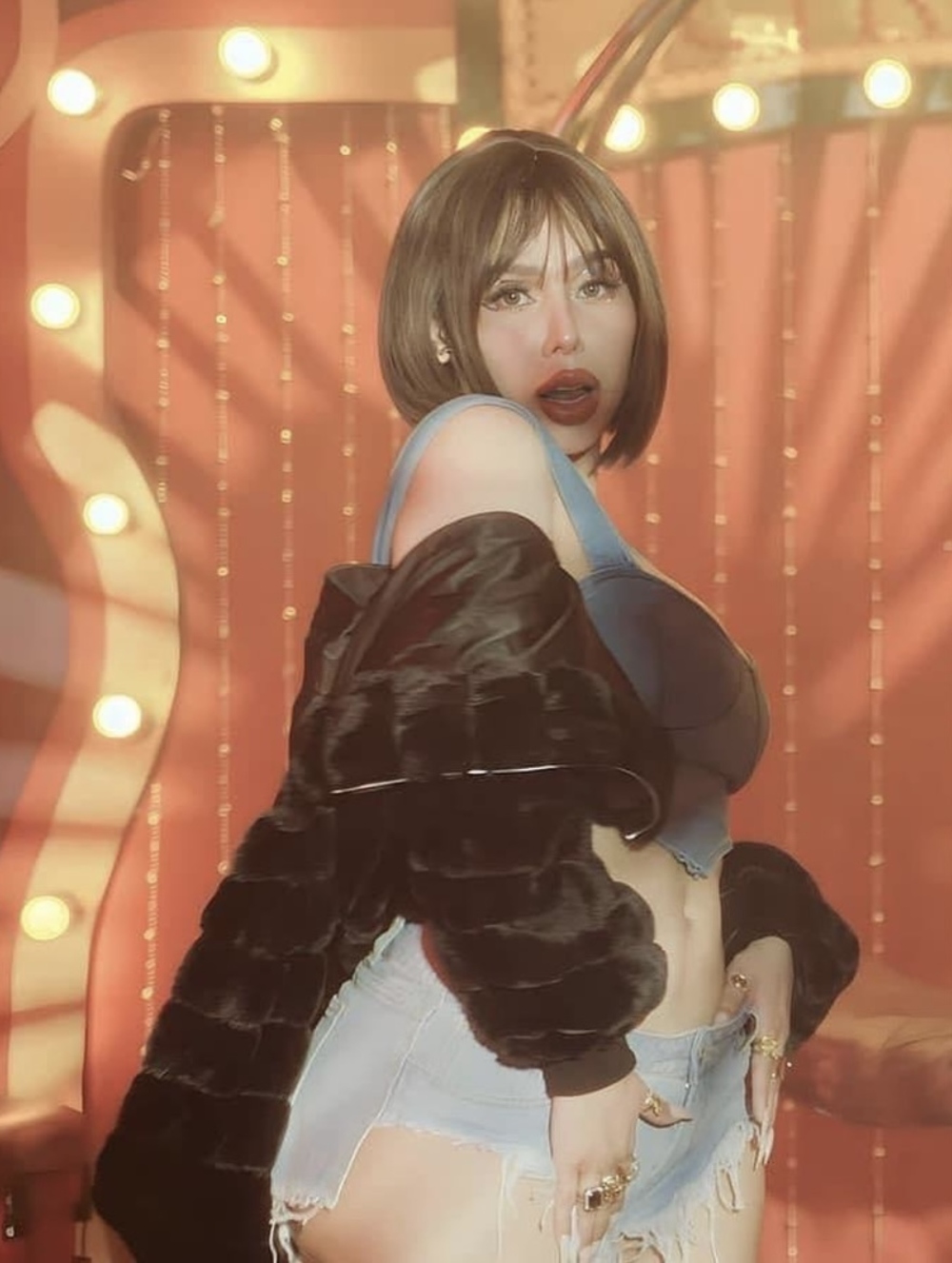
“MALIBOG PAG LASING”
HITS
The Malibog Pag Lasing music video actually attempts to champion sexual liberation—a concept that's often muddled because of the various meanings associated with the phrase “liberated kasi…”
However, we should start educating the next generation that the essence of sexual liberation lies in women following their own choices free of societal judgment.
It recognizes that true freedom means having the agency to decide what feels right for oneself, whether that means engaging in little to no sexual activity or to exploring a highly active sex life.
What matters most is that these choices are made freely, willingly, without coercion.
The keyword is consent.
MISSES
Despite Toni intending for her song to only reach “mga malilibog na tao,” it does damage beyond its announced intentions by perpetuating nonconsensual sex.
Certain lyrics—such as “Malasing mo lang ako agad sasama, kahit 'di mo 'ko akitin” and “Oops wait baka bigla kitang mahila, shot puno bago ka-ka-kant*tan na agad, 'di na kailangan ng ligaw. Kaya mo 'ko nilasing, iba 'ko 'pag nauuhaw”—glamorize scenarios where intoxicated behavior is taken for consent. It is not.
And don’t forget the pre-chorus from the male perspective: “Ramdam kong nag-iinit ka, lalo na't 'pag lasing ka na. Sa bawat tagay, nagiging tigre, nangangagat lalo't 'pag lasing ka…malibog pag lasing.”
Seriously? It's time to kick these stereotypes to the curb!
Social media's #MeToo movement is riddled with exactly the same narrative: women in the hold of alcohol and spiked drinks taken advantage of, which makes it even sadder that songs like "M.P.L." can quickly trivialize the gravity of the experience.
Toni’s fans argue that her critics are hypocrites for enjoying Cardi B's music, like "WAP." But let's not get sidetracked here. "WAP" celebrates empowered baddies who know their sexual kinks, turn-ons, and how frequently they want these.
Contrarily, Toni's song sensationalizes being okay with sexual assailants—nay, predators—exploiting intoxicated women because the women become "malibog" anyway under the influence.
“MASARAP NA MOMMY”
HITS
The Masarap Na Mommy music video makes an effort to embrace body positivity and defy the belief that motherhood equates to being past one's prime.
It banners the slogan: “Yes, moms can be sexy too!”
That’s it. That’s all the positive I could find.
MISSES
Musically, it's a cringe-fest for someone who appreciates rap. The punchlines are painfully weak, the rhyme scheme is all over the place, and Toni's rap delivery is several beats off. Even the chorus fails to stick in your head like the catchy "M.P.L."
Lyrically, three things strike a nerve.
First, the blatant fetishization of motherhood with its recurring line “Sarap ng p*king may tahi,” amid obscene shots of exposed genitals, Toni sucking milk from another woman’s nipple, and Toni scissoring with a pregnant woman.
Second, the lyrics from a male standpoint ignite unrealistic beauty standards for moms: “Ang sexy-sexy ng 'yong body, 'yan ang gusto ko na MILF.”
Thirdly, for a song that supposedly promotes body positivity, it badly fails at promoting the empowerment of women, which is essentially about women taking charge of their bodies.
Autonomy is the next keyword, people.
The line “Yung iba nagpalaglag, ba't tawag na dalaga, 'kala mo kung sinong mabait,” has by far been the most regressive I’ve heard from any track.
It pays no respect to what a woman had to go through to get to that point where she has to lose a child. (Maybe there was incest or rape or more.) It equates "mabait" with a woman who has never had to get to a crossroads where she had to make a painful decision that she may, or may not, regret later. (Maybe there was poverty and abuse and lack of education.)
Life is not simple; the world is not flat.
“Fake Friends”
HITS
Although Toni didn't strike gold with her debut single, "FF," this song has to be her best one yet. It demands applause for its impressive flow and rap bars, as well as its commendable costumes and set designs.
Unlike her later songs, "FF" doesn't offend with off-tangent remarks and doesn't create a rift between various types of women.
I even found it easy to excuse all the cussing because the song accurately delivers the level of angst someone reaches when left to deal with fake friends.
In fact, the song goes down really hard on fake people—roasting them, keeping them in check, putting them in their place. A juicy feud cannot go wrong in the world of rap.
We can also look past the nudity here because of its symbolism—Toni, naked, entangled with a serpent, the biblical representation of betrayal since olden days.
It may not be original, but it's intriguing. We want to find out how she gets to control the snake instead of getting choked or trapped by it. This kind of control must mean something!
MISSES
In true Toni Fowler fashion, the music video has its share of her content staple: profanity.
Apart from those low blows, another thing amiss with "FF" is how it subtly slut-shames the person alluded to in the song, with the lyrics: "Umalis ka at nanira, tatay ang dinahilan. Yun pala lakwacha, bunganga’y nasa tit*an!"
Not only is it vulgar, it also diminishes the person as someone who merely enjoys fellatio.
What's more, the quality of the video makes it feel low-budget. In her defense, however, this could be because the song is her entry into the music industry and her producers did not want to spend too much on an untested venture.
FINALLY: While these music videos are proof that we’ve shed many shackles of conformity—from boxing women into a single type to accepting women as assertive individuals with a voice—this is not enough to absolve the music videos' problematic facets.
With Toni, the issue is the missteps she takes in the journey towards genuine empowerment and sexual liberation.
On a scale of good to bad, the general consensus is that Toni Fowler's influence has always leaned toward the latter.
M.P.L, M.N.M, and FF just crystallized it for me.